Something strange and genuinely exciting is happening to Americana in 2025. The genre built on front porches, dusty highways, and the mythologized American interior is experiencing its most significant creative expansion in decades — and paradoxically, some of its sharpest new energy is arriving from places that have never seen a county fair. The old gatekeeping around authenticity is collapsing, and what's replacing it is something far more interesting.
Three Shifts Redefining the Genre
First, streaming has quietly rewired who finds this music and why. Spotify's algorithmic bleed between folk, Americana, and alt-country playlists has created a genuinely global listenership — listeners in Berlin, Bristol, and Brisbane are discovering Billy Strings, Charley Crockett, and Mdou Moctar in the same sitting. Americana's streaming numbers have grown 34% year-on-year internationally, according to the Americana Music Association's 2024 report, with the UK and Australia leading non-US growth.
Second, the sound itself is fracturing productively. The post-pandemic wave of artists leaning into raw, stripped production — fewer strings, more room noise, deliberate imperfection — has created space for working-class narratives that feel genuinely lived rather than aestheticized. Think Tyler Childers' recent gospel pivot or the rough-hewn directness of Arlo McKinley. The premium is on emotional weight over sonic polish.
Third, and perhaps most significantly, the genre is reckoning with its own mythology. Songs about dirt farmers and drifters land differently when the artist isn't performing a borrowed identity but processing something real — grief, labor, displacement, faith.
Where Black Mountain Tabernacle Fits
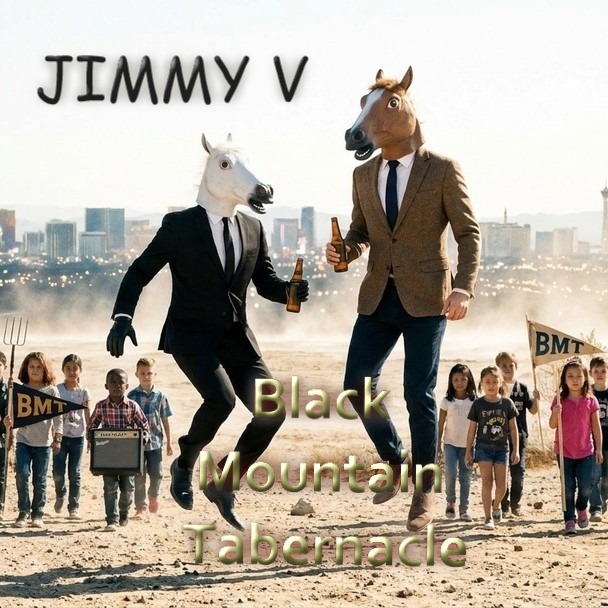
This is precisely the context in which Black Mountain Tabernacle makes complete sense. A UK-based act working in Americana could easily read as affectation. It doesn't. Tracks like Dirt Farmer and Billy Ray carry the weight of people who understand hard work and harder luck not as romantic abstraction but as lived texture. Jimmy V in particular has the kind of low-lit, unhurried gravity that rewards repeated listening — the mark of writing that's doing something beyond surface-level genre exercise.
What's notable is that Black Mountain Tabernacle isn't chasing Nashville. They're tapping something older and more elemental — the tradition that connects Appalachian balladry to British folk to the Delta, a thread that was always more transatlantic than American mythology admits.
In 2025, that perspective isn't a disadvantage. It might be exactly the angle this music needs. The dirt road, it turns out, runs in multiple directions.